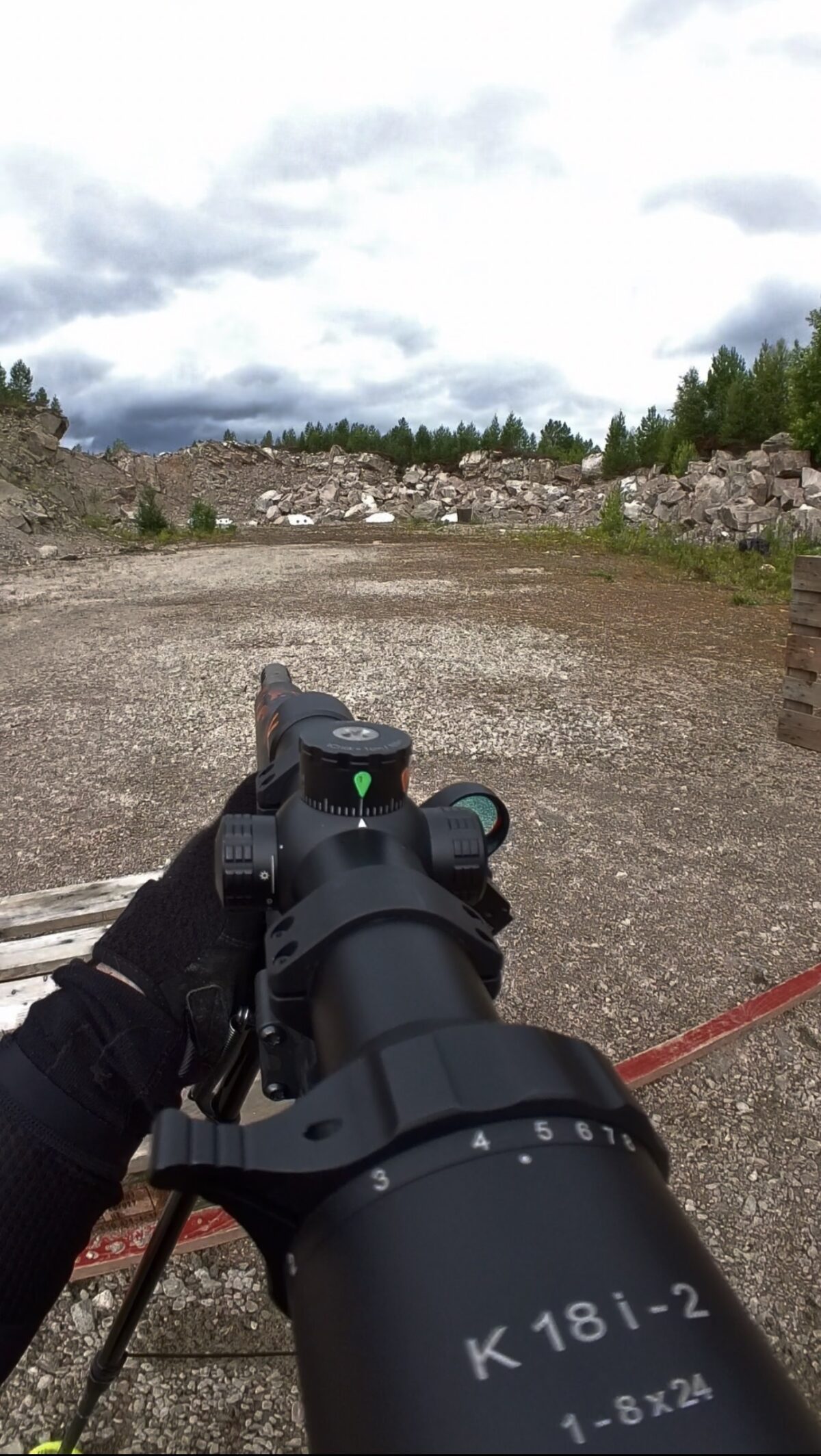
Rifle Rampage 2026 – Norwegian Championship
At the end of July 2026, the first-ever “Rifle Rampage” was held in Norway. At the same time, the match served as the official Norwegian Level III Championship in dynamic rifle shooting. The event was jointly organized by Agdenes Pistolklubb and Hemne Pistolklubb at the Stamnesdalen Motorsportsenter near Kyrksæterøra in the Trøndelag region, approximately two hours southwest of Trondheim.
Scandinavian IPSC rifle matches have long enjoyed a legendary reputation within the shooting community. And for good reason: the density of world-class shooters from Finland, Sweden, and Norway is exceptionally high. On top of that, matches are often held right in the middle of nature rather than on purpose-built shooting ranges, as is more common in Germany. The terrain encountered at these matches creates challenges for both shooter and equipment that simply cannot be replicated on a conventional range.
It was already clear before the match that this was going to be something special. Many of the former organizers of the legendary “The River Meeting”match series were once again involved in organizing the competition. Before the COVID pandemic, that series had been held several times near this new venue and was known for its spectacular stage layouts right in the middle of the Norwegian wilderness. At some of the previous matches, competitors had even engaged targets across a fjord!
The high expectations were not disappointed. The Norwegians once again committed fully to genuine terrain shooting in open country.
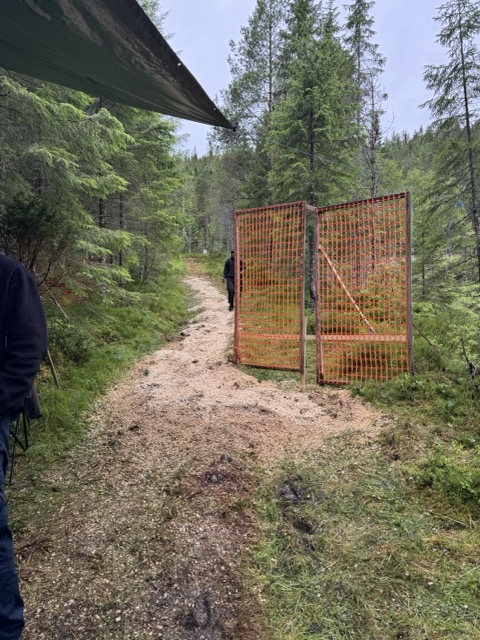
That created an unmistakable atmosphere, but it also presented Match Director Lars Selven and Range Master Lars B. Sand with considerable logistical and safety challenges. Because the shooting took place in open terrain, where natural backstops were often absent or replaced simply by rises in the terrain, clearly defined lateral safety angles were required on almost all of the 12 stages. In many cases, these were considerably narrower than the familiar 90-degree angles. They were, however, clearly marked and communicated using red-and-white flags. An inattentive swing of the rifle while changing position or magazines, or while negotiating an obstacle, would inevitably have resulted in a disqualification (DQ).
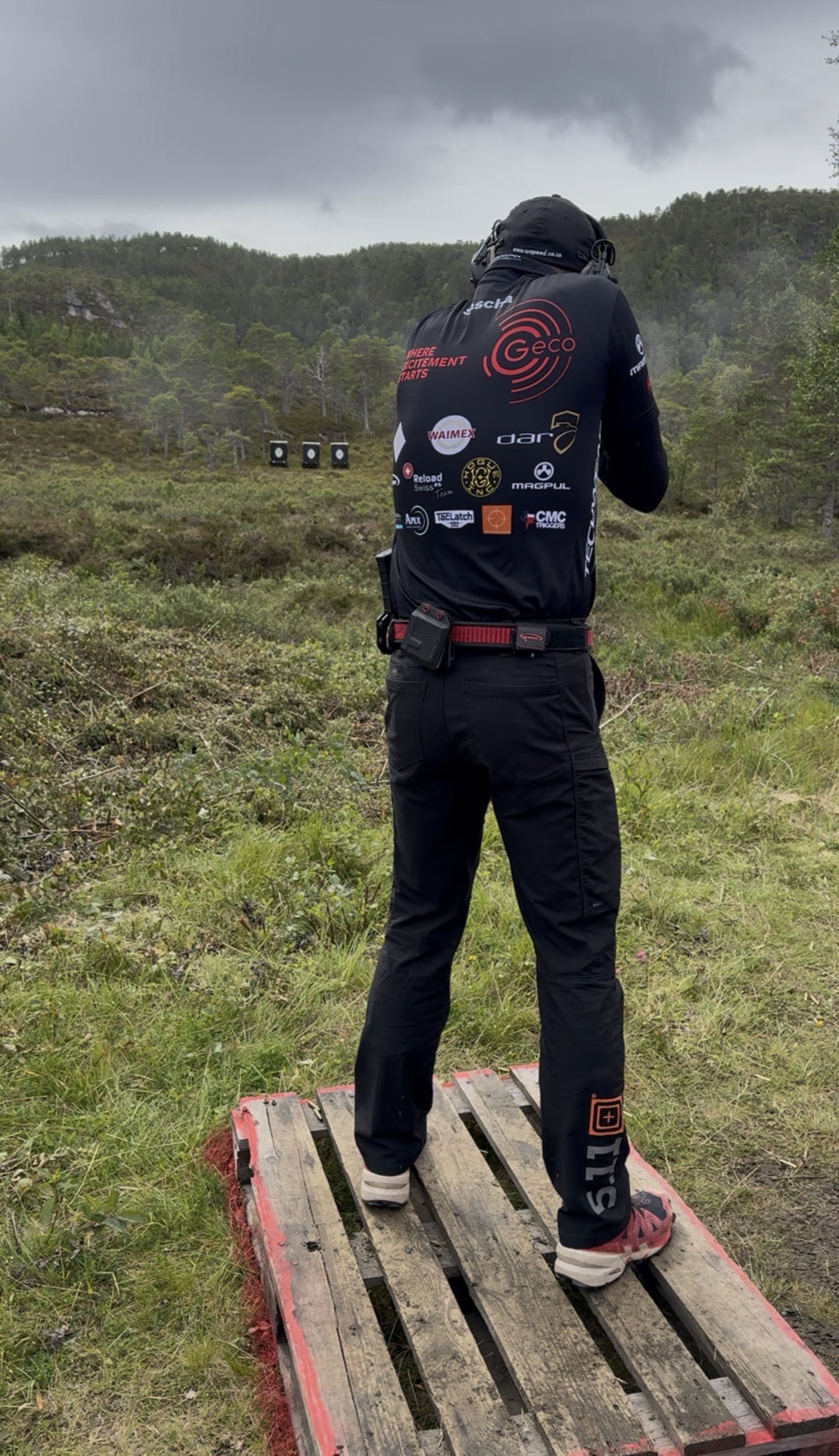
The 12 stages demanded the full range of modern IPSC rifle skills. Everything was on the menu: ultra-fast 10-round Short Course speed stages with moving targets, where every hundredth of a second mattered for the hit factor; a classic running-and-gunning Long Course; and Medium Courses at extended distances requiring prone or supported shooting positions. The Medium- and Long-Distance stages once again demonstrated one of the most important basic skills in IPSC rifle shooting: being able to deliver fast, accurate shots standing unsupported at 50–100 meters. Whether engaging a steel plate at 80 meters or three IPSC targets at 90 meters, a shooter who wanted to avoid losing unnecessary time by adopting unconventional shooting positions, such as sitting with one knee supporting the rifle, kneeling behind a fully extended bipod, or going prone, had to be able to engage those targets quickly and accurately while standing unsupported. It is a skill that simply cannot be practiced too often at home.
The Long-Distance stages followed the classic Scandinavian school of rifle shooting: full-size IPSC targets and steel targets, including 30 cm round plates, were placed at a wide variety of distances between 80 and 300 meters. Some stages also combined these long-range targets with close-range moving targets activated by step plates, all laid out in open terrain. On every stage, competitors were free to choose their starting position and their individual stage plan. That freedom, of course, did not make choosing the right stage strategy any easier and occasionally led to some intense discussions within the squad!
Electronic scoring at the long-range stages
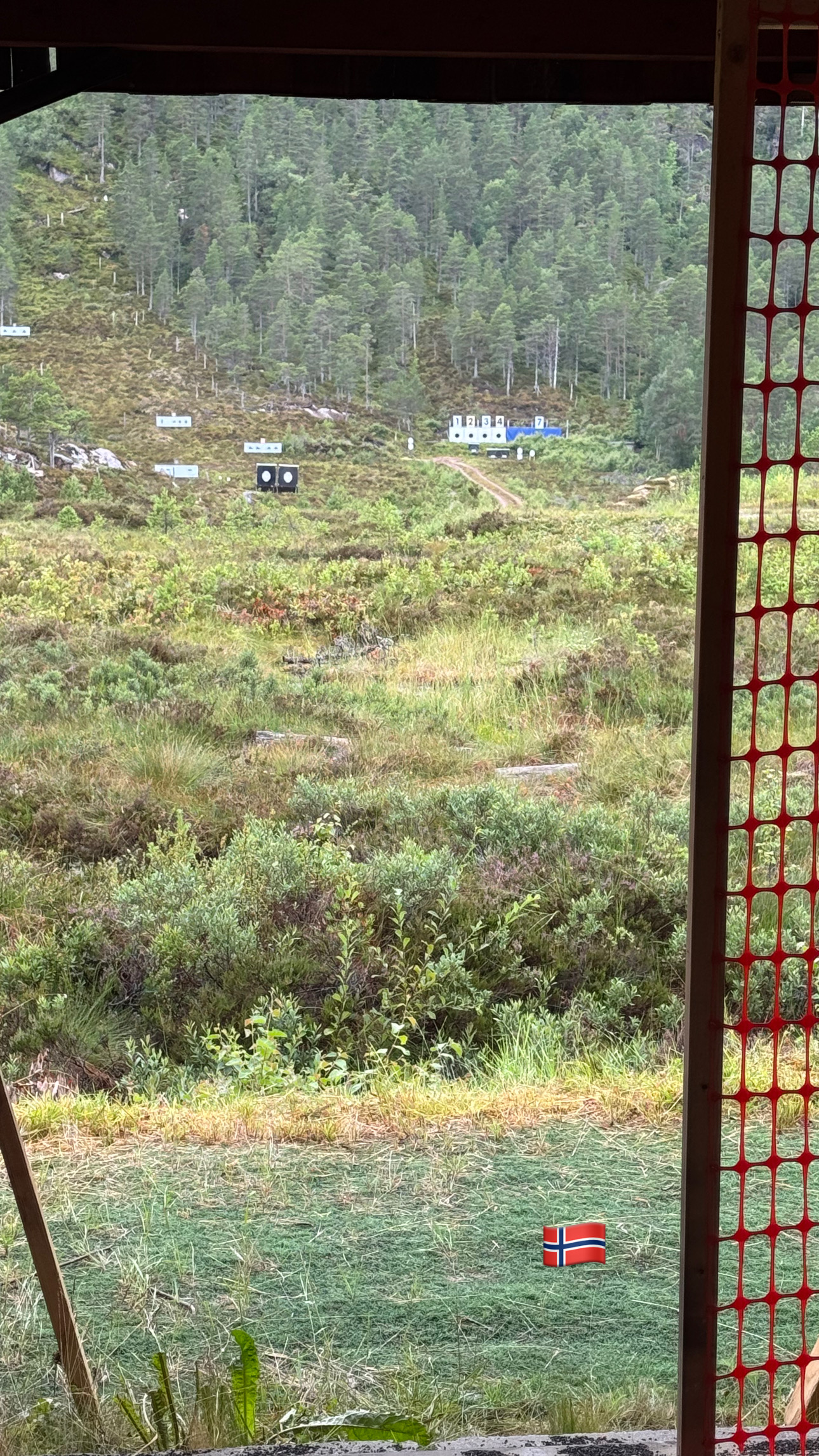
One particularly interesting logistical aspect concerned scoring on the long-range stages in the open terrain. On Stages 9, 10, and 11 around the 300-meter outdoor range, as well as Stages 4 and 5 on the motocross track, several IPSC targets were shared between different stages. For example, Stage 10 in the middle of the outdoor range shared its 160-meter targets with Stage 11 on the 300-meter range to the right. The 80-meter targets on the left side of Stage 10 were simultaneously the 90-meter targets for Stage 9 farther to the left. To keep the match moving and avoid sending scoring and resetting crews hundreds of meters across difficult terrain, the organizers used the Kongsberg electronic targets, already familiar from the IPSC Rifle World Championship in Finland.
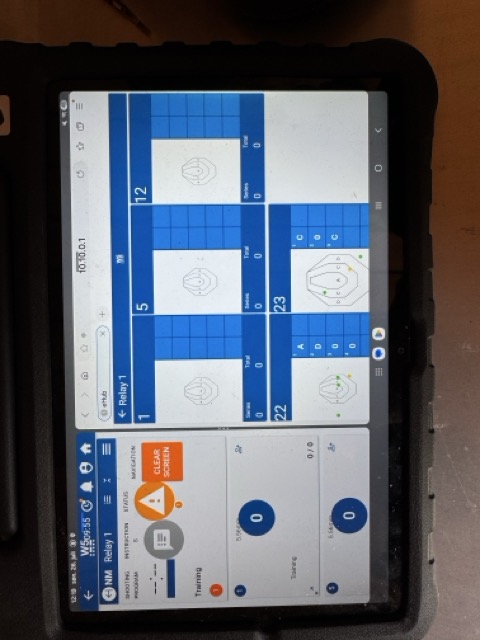
These electronic target systems look like conventional white IPSC targets mounted against a rectangular black background. Hits are registered through highly precise acoustic measurement and transmitted immediately by radio to the Range Officer’s monitor. In practical match terms, this offers enormous advantages:
- No scoring delays: There is no need to walk hundreds of meters to the targets after every shooter.
- No resetting time: There are no holes to tape. Hits are recorded in real time on the touchscreen.
- A much smoother match flow: Complex long-range stages can be run at maximum efficiency without long waiting periods.
The sequence on these shared ranges worked extremely well! Stage 9 on the left was shot first. Hits on the shared IPSC targets to the right were scored electronically and confirmed by the shooter. The targets were then reset, and Stage 10 in the middle could immediately begin. The two 70-meter steel plates on Stage 9, like all the other steel targets used throughout the match, automatically reset themselves. Stage 10 followed the same procedure with its electronic targets, after which Stage 11 on the right could begin. The squads simply rotated through the three stages, allowing shooter after shooter to complete their run.
This unusual scoring system resulted in a remarkably smooth match with very little waiting, despite the challenging terrain and shared targets.
Even when one of the targets at 100 meters on my Stage 5 at the motocross track failed to display hits, apparently because the shooter before me had shot through a signal cable leading to the antenna, the stage did not have to be repeated as a reshoot! The hits had remained stored in the target’s internal electronics and were immediately transmitted to the scoring monitor once the cable had been replaced.
Impressive capabilities—and certainly something to envy!
The Stages
It would be difficult to single out one stage as the most beautiful or the most challenging. Each of the 12 stages had its own character, whether because of the natural surroundings or the way the stage was constructed.
Here is a brief look at each one.
Stage 1 – “Sandtaket” The Sand Pit
This 32-round Long Course was located in a small, approximately 60-meter-wide sand pit in a forest clearing, with a mountain slope providing the backstop. True to its name, the ground consisted of extremely deep sand. Starting from either the left or right, competitors first had to engage two Mini Targets at approximately 50 meters through a deep window at an angle of around 80 degrees to the direction of movement. They then had to run through the deep sand while engaging another 12 IPSC targets at full speed, shooting across their direction of travel while moving. For German shooters, this was anything but familiar and correspondingly difficult. Where Norwegian shooters, as is common internationally, fired rapid double- and triple-taps, or even more shots, from a full sprint, I had to take considerably more speed out of my movement to make sure I could hit the targets reliably while running.
Stage 2 – “Skogsveien” The Forest Road
This stage was located higher up the hillside, beside the road. The first challenge was a roughly 150-meter climb up a steep section of deep ground. At the top was an even steeper forest road, where competitors had to run approximately 20 meters uphill over very wet and deep forest soil. First, one target had to be engaged through a window approximately 40 meters away at the top of the slope. Then four more targets were positioned at very short range on either side of the trail, partially hidden between the trees. Once again, this was pure running and gunning at maximum speed and physically very demanding.
Stage 3 – “Krossbanen 1”
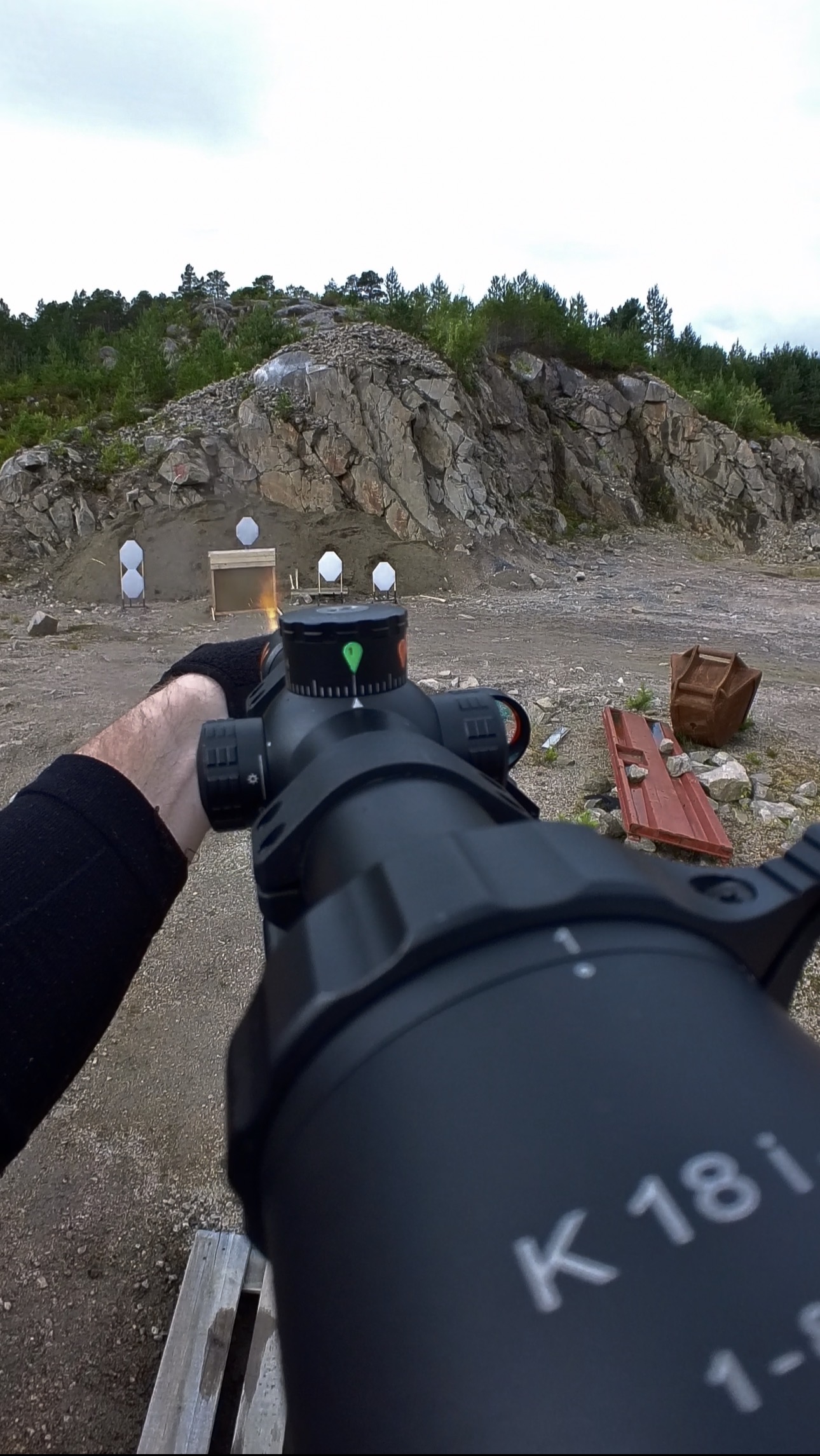
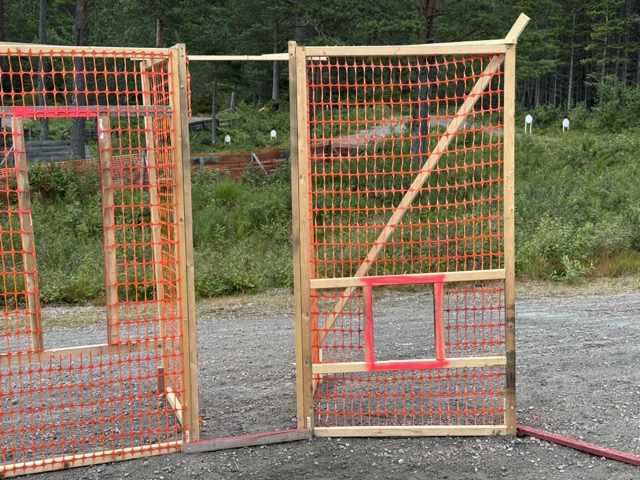
A small 10-round Stage 3 was shot under Option 3, meaning the rifle started unloaded. Five Mini Targets at approximately 50–60 meters were spread across the motocross track and had to be engaged through two openings—one low and one extremely low.
Stage 4 – “Krossbanen 2”
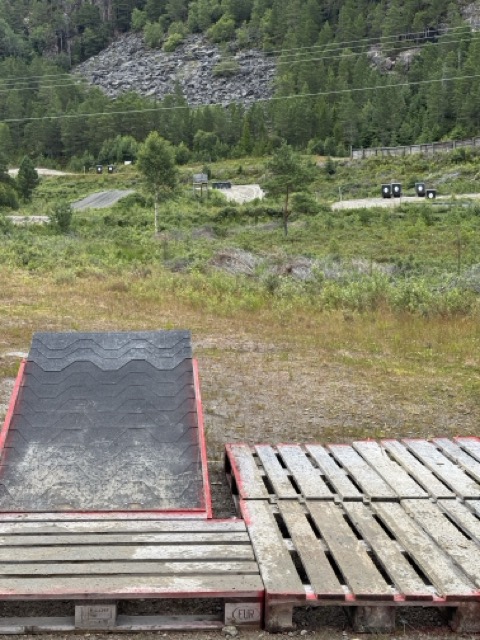
Fourteen IPSC targets had to be engaged. Two of them were fast swinging targets, one at the far right and one at the far left of the stage, activated by step plates. Four Kongsberg targets at approximately 150 meters were engaged from a pallet platform in the center-left of the stage. Three additional Kongsberg targets at approximately 90 meters had to be engaged from the same platform, this time toward the center-right. The remaining targets were positioned at short range next to the two moving targets.
The lateral safety angles were particularly tight here because the other two stages on the motocross track were immediately adjacent. At the same time, competitors had to carefully plan the sequence involving the moving targets, their activation plates, and the pallet platform.
Stage 5 – “Krossbanen 3”
This Medium Course consisted of two Kongsberg targets at approximately 200 meters, engaged from a rooftop-style structure; three 30 cm steel plates at approximately 160 meters; and four additional Kongsberg IPSC targets at approximately 100 meters, engaged from a pallet platform beside the roof.
Again, this presented a completely unfamiliar obstacle for German shooters due to the restrictions imposed by German firearms legislation.
How do you shoot most effectively from this stylized rooftop, with the targets uphill?Which magazine should you use? A 30-round magazine might be too long and could contact the roof, limiting the upward angle of the rifle. Where should the bipod be placed, and how far should the legs be extended?
And so on.
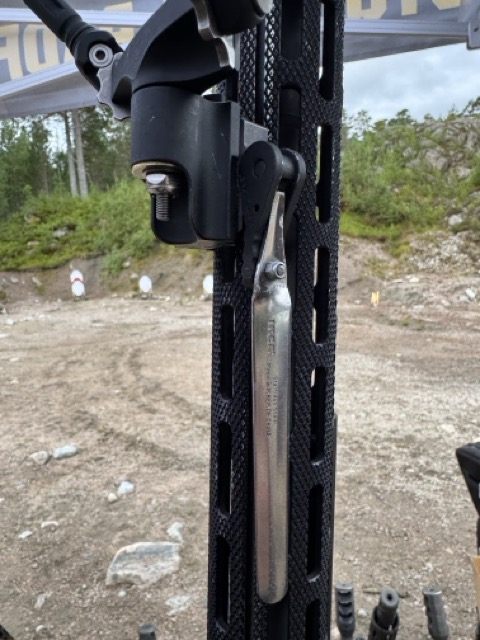
In the end, the solution that worked best for me was a shorter 20-round magazine with a four-round extension as a safety reserve, combined with a fully extended bipod mounted on the front rail. The bipod was placed on the short, sloping front section of the roof. The magazine provided just enough clearance without touching the roof, while my elbows could still maintain contact with the roof in the prone position. This created a stable shooting position for the 200-meter paper targets and 160-meter steel.
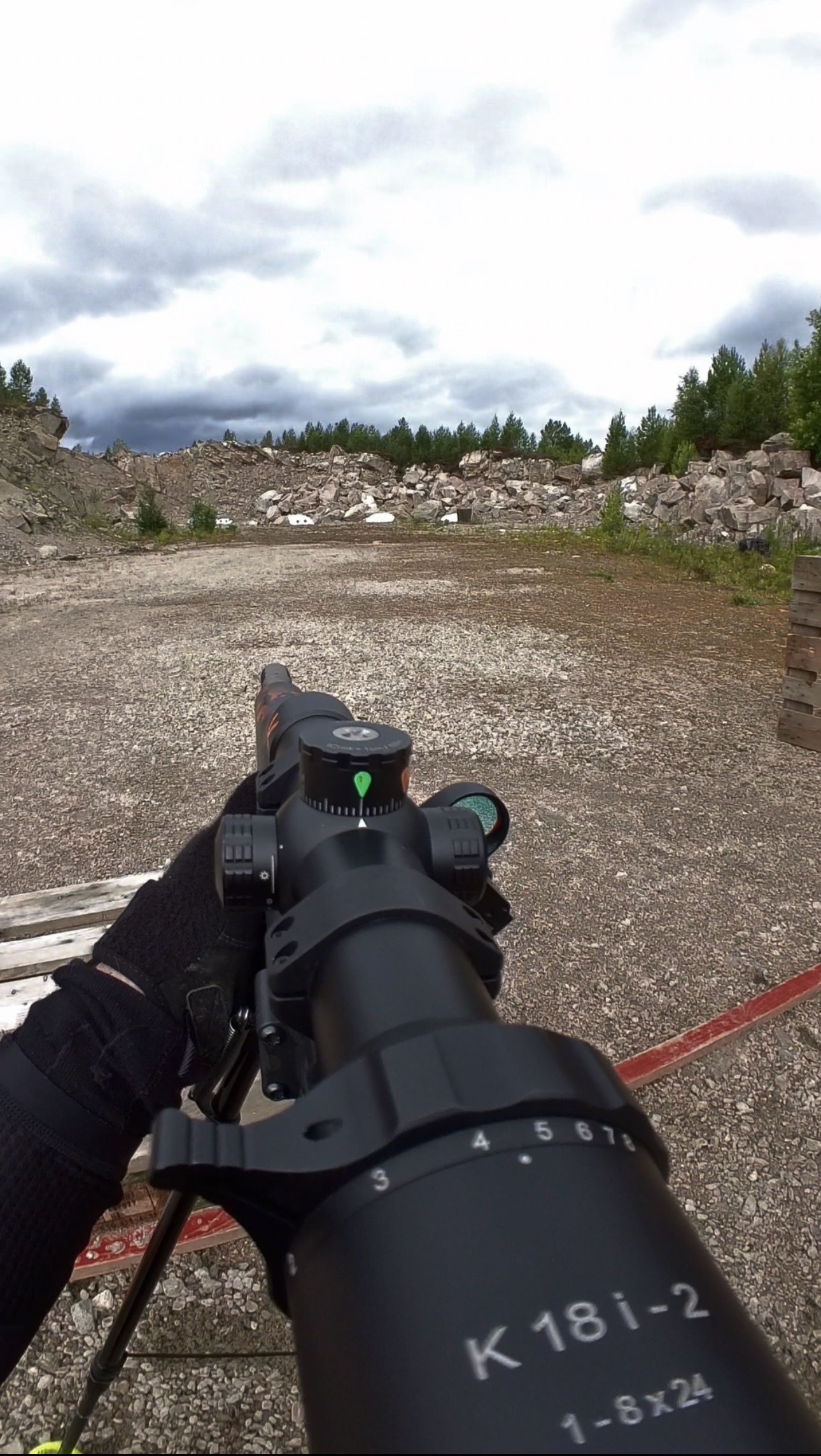
Stage 6 – “Steinbruddet 1” The Quarry
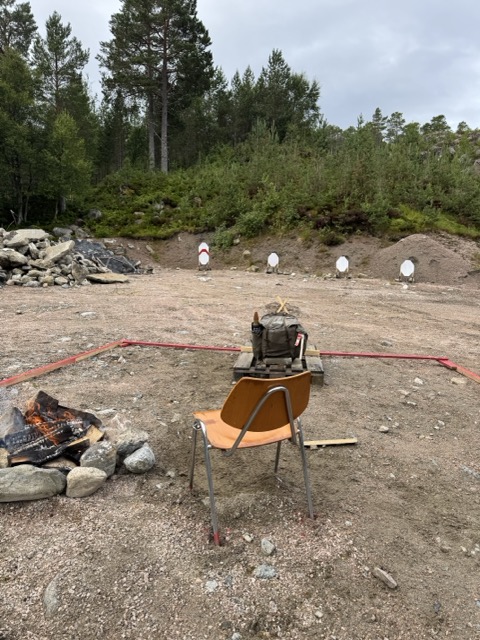
A Short Course in a small quarry. The starting position was seated next to a real campfire, with a piece of firewood in one hand. The unloaded rifle was resting in a small bipod stand, while the required magazine was placed on the backpack next to it. A genuine campfire setting in the middle of the Norwegian wilderness! After the start signal, five targets at approximately 18–20 meters had to be engaged. This was also where the only No-Shoot target of the entire match appeared.
Stage 7 – “Steinbruddet 2”
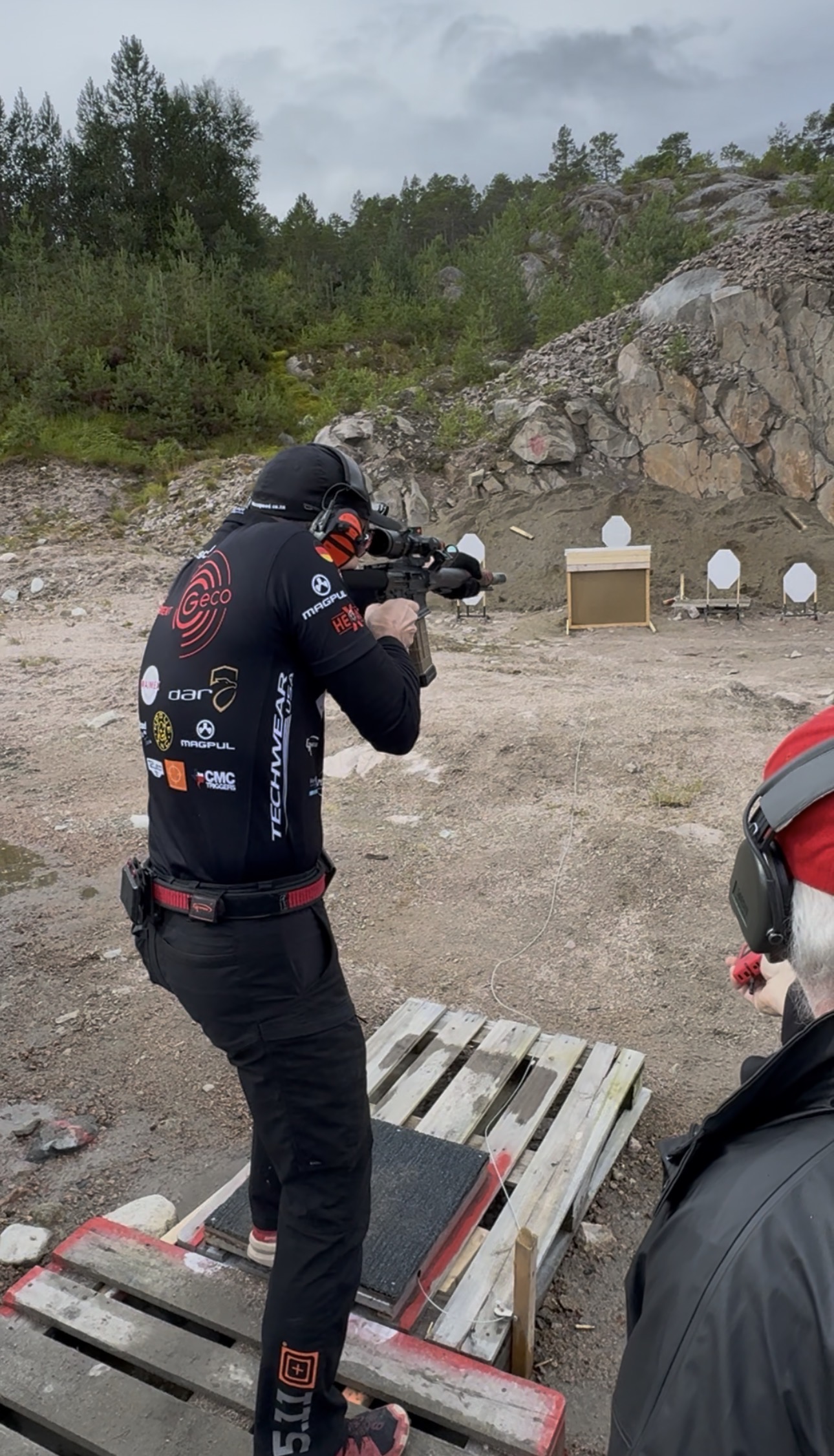
Another fast Short Course. Standing on a pallet, the shooter activated a fast up-and-down target positioned between four other IPSC targets by stepping on a pressure plate. The key tactical question was when to activate the target and when to engage the moving target. I chose the safer option: activate immediately, engage the up-and-down target, then shoot the right-hand targets followed by the left-hand targets. That gave me third place on the stage with a time of 4.32 seconds and only one C hit. The stage winner, however, chose a much more aggressive approach. He activated the plate and then shot from left to right in one continuous movement, engaging the two targets on the right first, followed by the moving target as it traveled downward, and finally the two stationary targets on the left.
Full risk—and spectacularly rewarded.
He finished in just 3.18 seconds with three C hits, producing a hit factor of 13.8 and giving him a 20-percent advantage over second and third place. Of course, this high-risk strategy did not work out for everyone. The shooter who finished fourth on the stage also chose the aggressive option and was a full second faster than me. It looked spectacular, but the numerous C and D hits resulted in a lower hit factor. His was 11.1 compared with my 10.8.
As always, the key was to realistically assess your own capabilities and collect points rather than simply chase the fastest possible time.
Stage 8 – “Steinbruddet 3”
A pure steel stage. Ten steel plates were spread throughout the quarry at distances between 70 and 100 meters. The far-right and far-left plates had to be engaged from the opposite corner of the stage, either standing or from a long bipod in a kneeling position. Due to the uneven terrain and vegetation, they could not be seen from a prone position. The remaining plates could either be shot supported from a rest or from a prone position.
As the first shooter in the squad, I chose the conservative option: a fully extended bipod and kneeling positions from two different shooting locations. As it turned out, this was too slow. The much faster solution was to shoot the left and right plates standing unsupported from the opposite corners and engage the remaining targets from a central position in the prone position.
Stage 9 – “Skytebanen Felt” Outdoor Range
The shooting position was a pallet. The targets consisted of three Kongsberg targets at 90 meters and two steel plates at approximately 60 meters, positioned about 40 degrees to the left. Immediately to the left was a post marking the safety angle. The tactical question was whether to shoot standing unsupported, from the fully extended bipod, or seated on one knee.
After my unsuccessful attempt with the long bipod on the previous stage, I chose standing unsupported this time. It turned out to be the right decision. There was a difference of roughly three seconds between the fastest shooters using the bipod—around 11 seconds—and those shooting standing unsupported. The fastest standing shooter completed the stage in just 8.09 seconds.
Stage 10 – “Skytebanen 100m”
From a doorway in the 100-meter range hut, competitors had to engage three Kongsberg targets to the left and two Kongsberg targets belonging to the 300-meter range to the right, at a distance of approximately 160 meters. The stage started standing, but almost everyone shot the targets from a prone position using a bipod. The main challenge was the wide horizontal transition while lying down between the targets far to the left and the 160-meter targets slightly to the right of the opening.
Stage 11 – “Skytebanen 300m”
From two shooting positions—a narrow firing slit approximately 60 cm high and a doorway of the 300-meter range—competitors had to engage the two Kongsberg targets shared with Stage 10, five standard IPSC paper targets, and three steel plates at distances between 290 and 300 meters.
This was where luck with the wind and weather could make a real difference. At times, gusty winds and occasional rain showers created unequal conditions. In other words: genuine IPSC outdoor shooting.
Stage 12 – “Samfunnshuset”
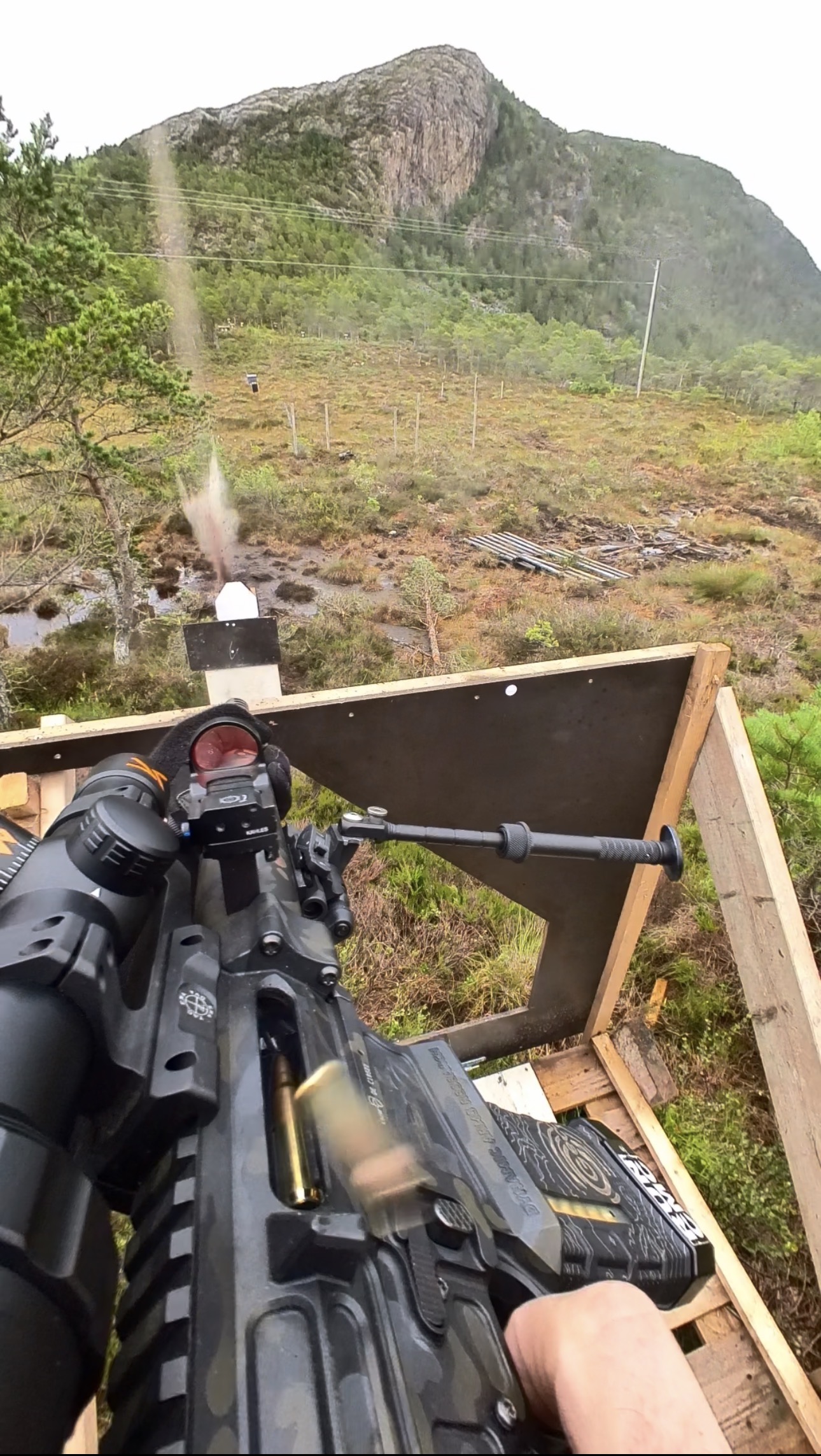
Certainly one of the most visually spectacular stages. A steep, forested mountainside formed the backdrop, with typical Norwegian wet and deep alpine tundra in front of it. Nine steel plates and one IPSC target were spread across the hillside and had to be engaged from a kind of elevated hunting stand built from pallets. One steel plate at approximately 80 meters and the IPSC target at only about 10 meters had to be shot standing unsupported. The remaining targets could be engaged from the prone position on the platform. When the close-range target in front of the platform was hit, fountains of water and mud shot several meters into the air. Spectacular!
The Results
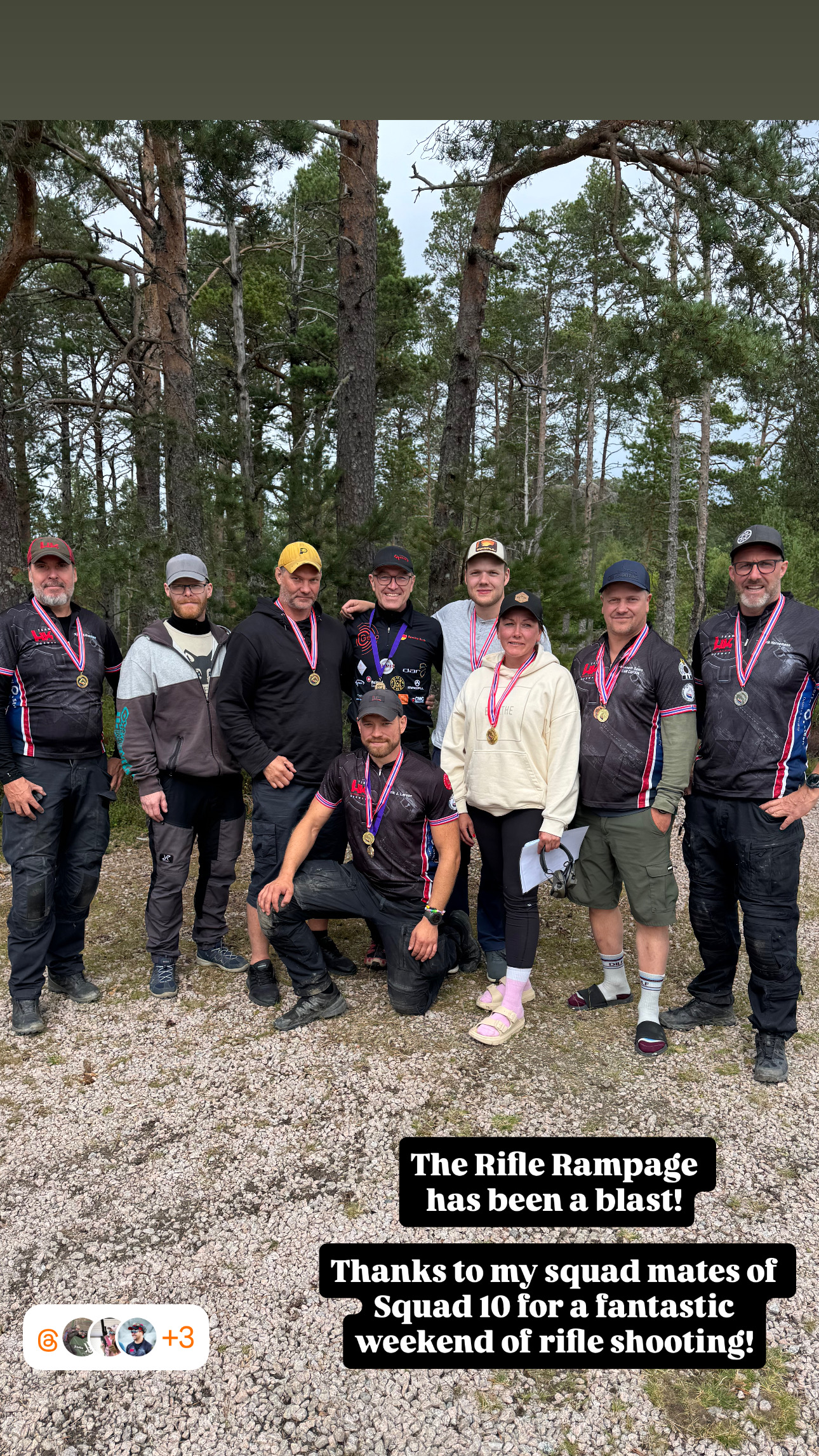
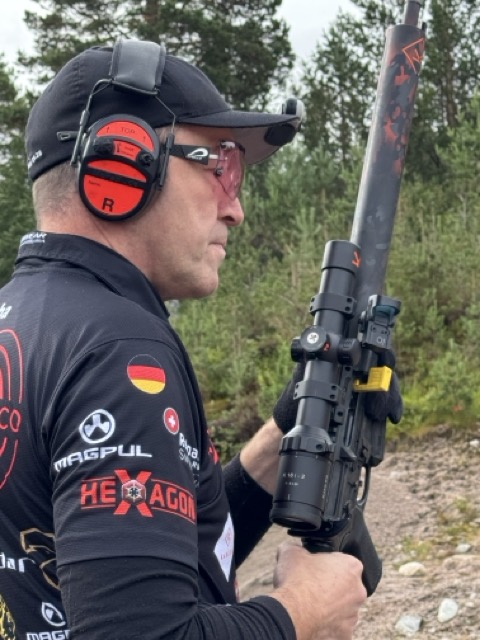
Looking at the results of the Rifle Rampage 2026 reveals the familiar picture seen at many international rifle matches: the top positions in Semi Auto Open (SAO) and Semi Auto Standard (SAS) were largely dominated by shooters from Norway and Finland. That made it particularly pleasing to see two German shooters among the leading competitors: Tim Schuhmacher in SAS and the author in SAO. Tim achieved an excellent second place overall against strong competition, while the author finished seventh overall and won the Seniors category.
The performance of Norway’s Eirik Johannes Larsen deserves special mention. He dominated the SAO division with an extraordinary 20-percent lead – a margin that speaks for itself.
I had the pleasure of shooting the match in the same squad as Eirik and the shooters of HK Team Norway.
Watching Eirik shoot all 12 stages was a real pleasure! Precise, fast, deliberate, and always with the right strategy exactly when it mattered.
Training opportunities make a difference
This kind of dominance is not a coincidence. It is the result of excellent training opportunities on large-caliber outdoor ranges in Scandinavia. German IPSC rifle shooters, on the other hand, are heavily conditioned by legal restrictions, including the 10-round magazine limit and the prohibition on shooting while moving.
As a result, the typical German approach is strongly shaped by the pattern: Run – Stop – Aim – Shoot. Without the luxury of extra shots. Watching the Scandinavian top shooters, the difference becomes obvious. At close range, they engage targets dynamically while moving at full speed, firing rapid strings without breaking their stride. That saves time and requires an enormous level of weapon control.
A relaxed and well-organized match
Overall, the entire match ran remarkably smoothly. Nothing seemed capable of upsetting the organizers or range staff. The match was extremely well organized, and during the lunch breaks, the clubhouse at the motocross track offered a wide selection of hot and cold food.
It was also great to see how many competitors stayed for the awards ceremony on Sunday afternoon. With some shooters having traveled considerable distances to get there, that cannot be taken for granted. Perhaps the extensive prize table for the top finishers and the main prize in the subsequent raffle helped keep people around – but regardless, it was certainly worth mentioning.
The two-day match format undoubtedly contributed as well. All competitors shot eight stages on Saturday and the remaining four stages on Sunday morning, leaving everyone enough time to enjoy the event without having to rush through all 12 stages in a single day.
The Rifle Rampage 2026 was an outstanding IPSC event and absolutely worth the long journey.
The organizers from Agdenes Pistolklubb and Hemne Pistolklubbsucceeded in putting together a Level III match that was extremely challenging, exceptionally smooth, and, above all, safe – even in terrain that made the organization considerably more demanding.
Or perhaps precisely because of that terrain.
The combination of spectacular Norwegian scenery, genuine terrain shooting, demanding long-range stages, fast dynamic stages, and excellent organization made the Rifle Rampage a match that will be remembered for a long time.
For anyone who enjoys IPSC rifle shooting, this was about as far removed from shooting on a conventional flat range as you can get – and that was exactly what made it so special.
Want to see the Rifle Rampage in action?
I’ve posted plenty of videos from the match on my Instagram, including some of the stages described above.
Follow me there if you’d like to see more IPSC rifle action, match footage and future competitions!